Dental Implants Calabasas CA for Front Tooth Replacement
Losing a front tooth changes more than a smile. It affects speech, first impressions, the way the lips rest, and Dental Implants Calabasas CA even how confidently someone laughs in a room full of people. In practice, front tooth replacement is one of the most emotionally charged conversations in dentistry because the stakes are visible every single day. Patients do not just want a tooth back. They want their own appearance back, or at least something so close that nobody notices a difference.
That is where dental implants earn their reputation. For the right candidate, an implant can replace a missing front tooth with excellent stability, bone support, and a very natural result. Still, the phrase “front tooth implant” makes the process sound simpler than it often is. Replacing a front tooth is usually more demanding than replacing a molar. The reason is straightforward: a small mismatch in angle, gum contour, or color is easy to see in the front of the mouth.
For people researching Dental Implants Calabasas CA, especially for a front tooth, it helps to understand what makes this treatment unique, what a realistic timeline looks like, and what separates an average cosmetic result from a truly seamless one.
Why the front tooth area requires a different level of planning
A front tooth sits in what many dentists call the aesthetic zone. That means every millimeter matters. The visible tooth is only part of the picture. The gumline, the height of the papilla between teeth, the lip line when you smile, and the thickness of the bone behind the upper lip all influence the final appearance.
A back tooth implant can function beautifully even if the cosmetics are not perfect. A front tooth implant does not get that margin for error. If the implant is placed a little too far forward, the crown can look bulky or the gum may recede over time. If it is placed too deep or too shallow, the emergence profile, the way the tooth appears to come out of the gum, may look unnatural. If bone and soft tissue were lost after the tooth was removed, simply placing an implant may not be enough to restore the original shape.
Patients are often surprised by how much attention goes into the surrounding tissue. In the front, a dentist is not only replacing enamel and root structure. They are managing architecture. The best results come from planning the final smile first, then positioning the implant to support it.
Who makes a good candidate for a front tooth implant
Most healthy adults can be considered for dental implants, but candidacy for a front tooth replacement depends on a few very specific factors. Bone volume is a major one. When a tooth has been missing for a while, the body begins to resorb the bone that once held the root in place. In the front of the upper jaw, that loss can happen quickly and show through the gum as flattening or collapse.
Gum health also matters. Active periodontal disease, untreated infection, or chronic inflammation around neighboring teeth can compromise healing and the appearance of the final result. Smoking is another important factor. It does not automatically rule out treatment, but it increases the risk of healing complications and affects long-term tissue stability, particularly in visible areas.
Bite pattern deserves careful evaluation too. A patient who grinds, clenches, or has a deep overbite may place heavy forces on a front implant. That does not mean treatment is impossible. It means the restoration has to be designed with those forces in mind, and sometimes night guard protection becomes part of the long-term plan.
In everyday practice, a good candidate is not just someone with enough bone on a scan. It is someone whose mouth, habits, and expectations line up with what the treatment can realistically achieve.
The first visit is about more than replacing a tooth
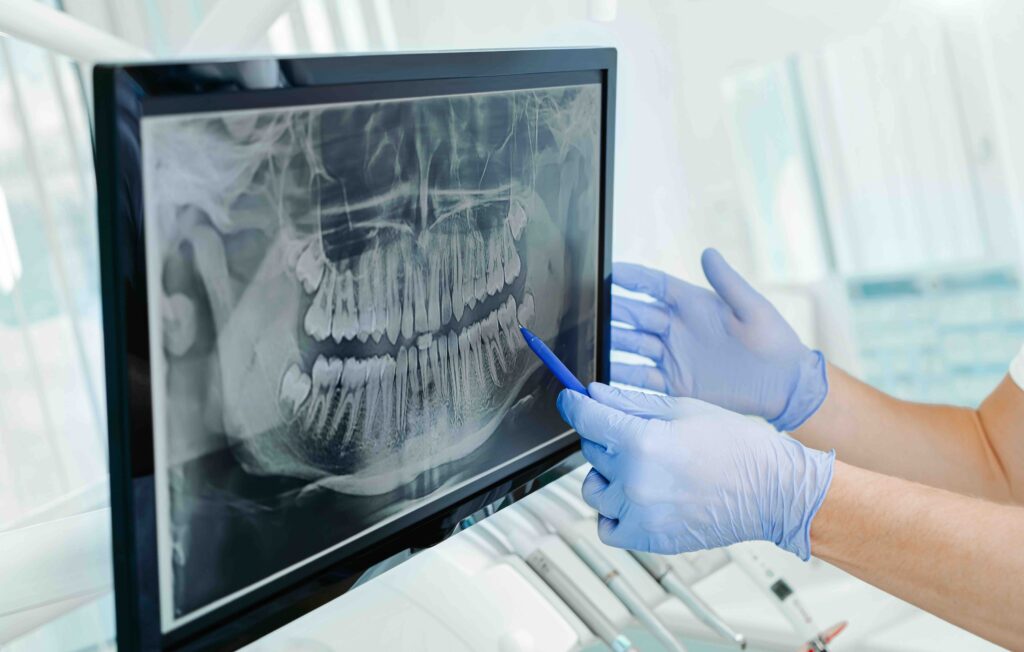
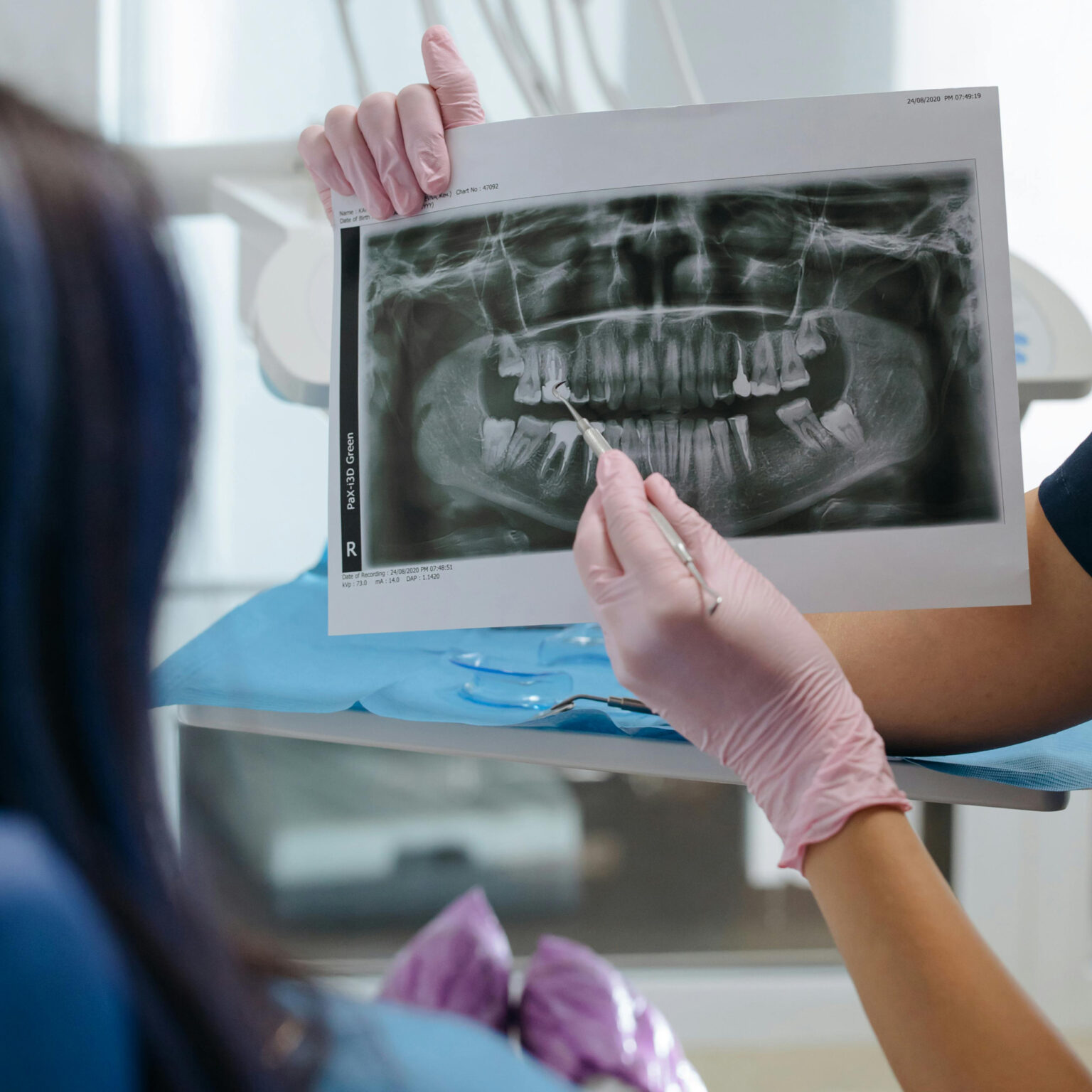
A consultation for front tooth replacement should feel detailed. If it feels rushed, that is worth noticing. This is not a case where quick impressions are enough. The dentist typically evaluates the missing tooth site, neighboring teeth, gum levels, smile line, bite, and facial symmetry. A 3D scan, commonly a CBCT, is often used to assess the width and height of the bone. Photographs help analyze how the gums show during speech and smiling.
Sometimes the conversation reveals options the patient had not considered. If the tooth is still present but failing, timing becomes critical. There may be an opportunity to preserve more bone and gum shape by coordinating extraction, grafting, and temporary replacement carefully. If the tooth has already been missing for months or years, tissue rebuilding may be part of the discussion.
What experienced clinicians look for at this stage is not just whether an implant can be placed, but whether it can be placed in a position that supports a convincing front tooth.
Immediate implant or delayed implant?
This is one of the most common questions, and the answer depends on anatomy, infection, and tissue condition rather than convenience alone. An immediate implant is placed at the same visit as the extraction. A delayed implant is placed after a period of healing, sometimes after grafting.
Immediate placement can be an excellent approach when the surrounding bone is intact, infection is controlled, and the implant can be stabilized in the right three-dimensional position. It may help preserve tissue contours and shorten the overall timeline. Patients often appreciate that there are fewer surgical stages.
But immediate placement is not automatically the best choice. If the facial bone is thin or damaged, if there is significant infection, or if the site cannot support ideal implant positioning, rushing may lead to a weaker cosmetic result. In those cases, grafting first and placing the implant later can produce a more stable and attractive outcome.
A front tooth replacement rewards restraint. The best decision is the one that protects the long-term shape of the gum and bone, even if it adds a few months to treatment.
Bone grafting is not a setback
People sometimes hear “bone graft” and assume something has gone wrong. In reality, grafting is a routine part of many front tooth implant cases. Its purpose is to rebuild or preserve the ridge so the implant has enough support and the final crown does not look sunken or artificial.
When a front tooth is extracted, a socket graft is often placed to reduce bone loss during healing. If the site already shows a visible defect, more substantial grafting may be needed before implant placement. There are also cases where a connective tissue graft helps thicken the gum and improve the final contour, especially in patients with thin tissue biotypes.
From a cosmetic standpoint, this matters a great deal. Patients tend to focus on the crown, but the supporting tissue often determines whether the result looks natural. A beautifully made ceramic crown will still look wrong if the gumline is uneven or the ridge is collapsed.
The temporary tooth plays a bigger role than most people expect
For a front tooth, very few patients want to leave without something in the space. Fortunately, there are several temporary options, and choosing the right one affects both appearance and healing. A removable flipper is common, but it can be awkward and may put pressure on healing tissue if not adjusted properly. An Essix-style retainer with a temporary tooth is often more discreet. In some cases, a fixed temporary bonded to neighboring teeth works well.
If the implant is stable enough and the conditions are ideal, a temporary crown may be placed soon after surgery, sometimes the same day. This is usually a non-biting temporary, meaning it is shaped for appearance but kept out of heavy function. That distinction matters. A front implant still needs time to integrate with the bone, and early overload can jeopardize healing.
A well-designed temporary is not just cosmetic. It can help shape the soft tissue so the final crown emerges more naturally from the gum.
What the treatment timeline usually looks like
Timelines vary, but front tooth implant treatment rarely follows a one-size-fits-all schedule. Some cases move quickly. Others need staging for better long-term aesthetics.
A typical sequence may include the following:
- Consultation, imaging, and treatment planning.
- Tooth extraction and grafting, or implant placement if conditions allow.
- Healing period for bone integration and tissue maturation, often several months.
- Digital scans or impressions for the final crown.
- Delivery and fine-tuning of the permanent restoration.
For a straightforward case with immediate placement and favorable anatomy, the full process may take roughly three to six months. For cases involving grafting or major tissue reconstruction, six to twelve months is not unusual. That can feel long when the missing tooth is in the front, but good tissue takes time to mature. Trying to shortcut biology is one of the reasons some front implants end up looking obvious.
Color, shape, and symmetry matter more in single front tooth cases
Replacing one front tooth is often harder than replacing several. With multiple teeth, a ceramist has more freedom to create a harmonious set. With one tooth, the restoration must blend into a smile that already exists. That means matching the neighboring tooth in color, translucency, brightness, surface texture, and shape.
Natural front teeth are not flat blocks of white. They reflect light differently at the edge than at the center. Some have faint internal character, tiny halo effects, or subtle warmth near the gumline. A skilled lab technician can reproduce these details, but only if the records are accurate and the implant is placed correctly.
Even small asymmetries can be noticeable. If one central incisor appears longer than the other by a millimeter, most people can see it, even if they cannot explain why the smile feels off. This is why final restorations in the front usually involve try-ins, shade evaluation in natural light, and careful communication between dentist and lab.
Materials and restoration choices
Most front tooth implant crowns are made from all-ceramic materials because they offer strong esthetics and good light transmission. Zirconia and layered ceramic options are common, but the best choice depends on the patient’s bite, tissue thickness, and cosmetic goals. There is no single “best” material for everyone.
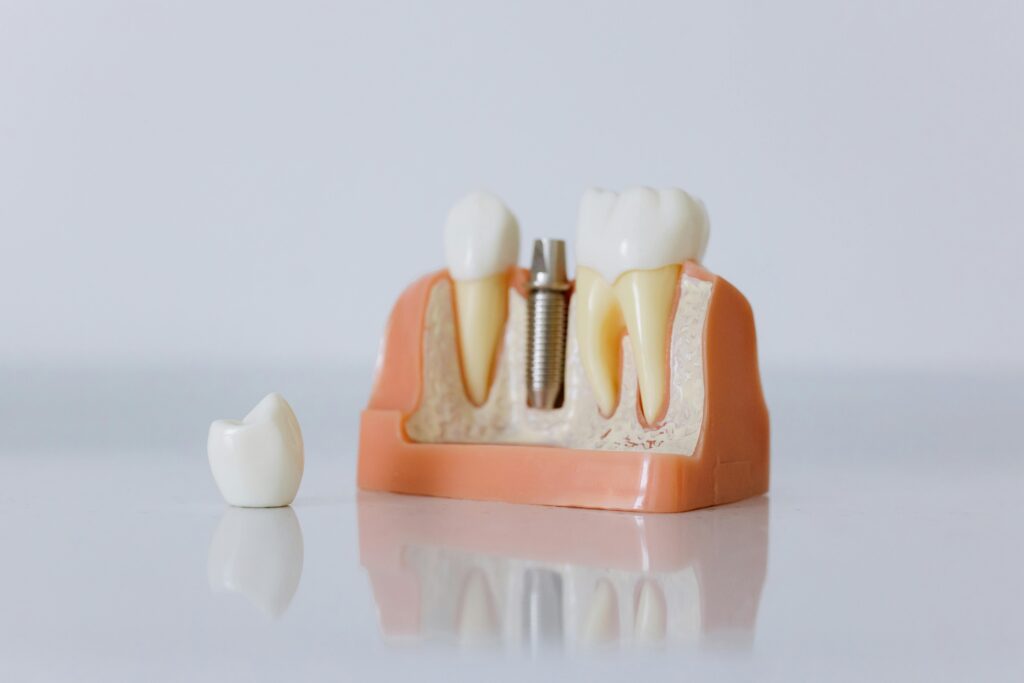
The abutment, the connector between implant and crown, also matters. In visible areas, custom abutments are often preferred because they can support the gum more precisely and improve the emergence profile. In patients with very thin gum tissue, material selection becomes especially important because the wrong underlying shade can subtly show through.
This is one of those situations where the cheapest route often looks like the cheapest route. A front tooth implant involves surgery, restorative planning, and laboratory artistry. All three influence the final appearance.
Common concerns patients bring up
Most people considering Dental Implants Calabasas CA for a front tooth ask variations of the same practical questions. They want to know if it will hurt, how long they will be without a tooth, whether the result will match, and how long it will last.
The discomfort after implant placement is usually manageable with standard post-operative care, especially for a single tooth. Swelling and tenderness are more common than severe pain. The bigger issue tends to be patience during healing and temporary wear.
Longevity depends on many variables, but implants can serve for many years when they are well placed and well maintained. That said, the crown on top may eventually need replacement due to wear, cosmetic changes, or normal service life. Patients should understand that “permanent” does not mean “never needs attention again.” It means the implant itself is designed as a long-term tooth root replacement.
Situations that require extra judgment
Not every front tooth implant case is routine. Trauma cases are a good example. A patient who lost a front tooth in an accident may also have damage to the surrounding bone, lip, or adjacent teeth. These cases often need staged treatment and very close planning.
Another challenging group includes patients with high smile lines. If a lot of gum shows when smiling, even minor discrepancies in tissue contour become visible. Thin gum tissue also raises the difficulty level because recession is easier to see and harder to disguise.
Then there are young adults. Implants should usually wait until facial growth is complete. Placing an implant too early can create esthetic problems later because the natural teeth continue to erupt subtly over time while the implant remains fixed in position. For a teenager or someone at the edge of skeletal maturity, a temporary solution may be the wiser choice until growth is finished.
How to protect the final result
Once the crown is in place, the job is not over. Long-term success depends on keeping the surrounding tissues healthy and protecting the implant from overload. A front implant can fail cosmetically even if it remains firmly integrated, simply because the gums recede or inflammation develops around it.
The habits that matter most are simple:
- Brush thoroughly and clean around the implant every day.
- Keep professional hygiene visits on schedule.
- Wear a night guard if you grind or clench.
- Avoid using the front teeth to bite very hard objects.
- Report any looseness, bleeding, or gum changes early.
Peri-implant inflammation often starts quietly. Patients may notice slight bleeding or tenderness and assume it is minor. Early intervention makes a real difference. Waiting six months because the implant “still feels fine” can allow tissue damage to progress.
Comparing an implant to a bridge for a front tooth
A dental bridge is still a valid option in some cases, especially if the neighboring teeth already need crowns. But when adjacent teeth are healthy, many patients prefer an implant because it replaces the missing root and avoids preparing the natural teeth next door.
There are Dental Implants Calabasas CA trade-offs. A bridge is sometimes faster. It may also be more practical when implant placement is not feasible due to medical or anatomical limitations. On the other hand, bridges do not preserve bone in the missing tooth site, and cleaning underneath them requires special attention. For a single missing front tooth with healthy neighboring teeth and good implant conditions, an implant is often the more conservative long-term choice.
That does not mean it is automatically the right choice for every person. Cost, treatment time, tissue condition, and patient priorities all deserve a frank conversation.
Choosing a provider for front tooth implants in Calabasas
When a front tooth is involved, technical competence alone is not enough. You want a clinician who pays attention to cosmetic details and can show consistent work in the aesthetic zone. That may be a general dentist with strong implant and cosmetic experience, a periodontist, an oral surgeon working closely with a restorative dentist, or a prosthodontist depending on the case structure.
The quality of the result often comes from teamwork. Surgical placement, provisional design, soft tissue management, and final crown fabrication all need to align. A provider who discusses gum architecture, provisional planning, and smile symmetry is usually thinking at the right level.
If you are evaluating Dental Implants Calabasas CA, ask to see before-and-after cases involving single front teeth, not just full-mouth transformations or back tooth implants. Front tooth cases reveal planning skill very quickly. Look for natural gumlines, symmetry with adjacent teeth, and crowns that disappear into the smile instead of drawing attention.
Cost considerations without guesswork
The cost of a front tooth implant can vary significantly because some cases are simple and others involve extraction, grafting, tissue augmentation, temporary restorations, and custom esthetic work. In many markets, a complete single implant case often lands in the several-thousand-dollar range, and front tooth cases may be at the higher end because of the cosmetic complexity.
It is wise to ask what is included. Sometimes the quoted fee covers only the implant placement, while the abutment, final crown, temporary tooth, scans, or grafting are billed separately. A lower initial quote can end up costing more once all phases are added.
Patients generally do best when they view the investment in terms of the full treatment sequence and the importance of getting the esthetics right the first time. Revising a compromised front implant is possible, but it is more involved, more expensive, and more frustrating than careful planning from the start.
What a successful result really looks like
A successful front tooth implant does not simply fill a space. It looks proportionate in conversation, feels stable when you bite lightly, supports the lip naturally, and blends with neighboring teeth in different lighting. The gumline looks healthy. The tissue between the teeth is present and balanced. Nothing appears overly white, overly long, or strangely flat.
The best compliment a patient can get after treatment is not “nice implant.” It is no comment at all, followed by the return of ordinary habits, smiling in photos, speaking without self-consciousness, and forgetting to cover the mouth when laughing.
That is the real goal of front tooth replacement. Not just restoration, but normalcy. For the right patient, with thoughtful planning and skilled execution, a front tooth implant can deliver exactly that.
Oaks Dental
5000 Parkway Calabasas, Suite 308
Calabasas, CA 91302, United States
Phone: +1 (818) 412-8349
FAQ About Dental Implants Calabasas CA
How much does a dental implant cost in California?
Costs vary with the number of teeth replaced, restoration type, imaging, and any extractions or bone grafting. Request an itemized estimate after an examination; a single advertised price may not include every treatment stage.
Can people with autoimmune disease get dental implants?
Some people may qualify, but the condition, medications, oral health, and healing risks require individual assessment. Share your medical history with your dentist, who may coordinate with your treating physician.
Can you have dental implants if you have osteopenia?
Osteopenia does not by itself establish whether implants are suitable. Your dentist must evaluate jawbone support and review bone-related medications and other risks before recommending treatment.